The quiet productivity shift happening right now
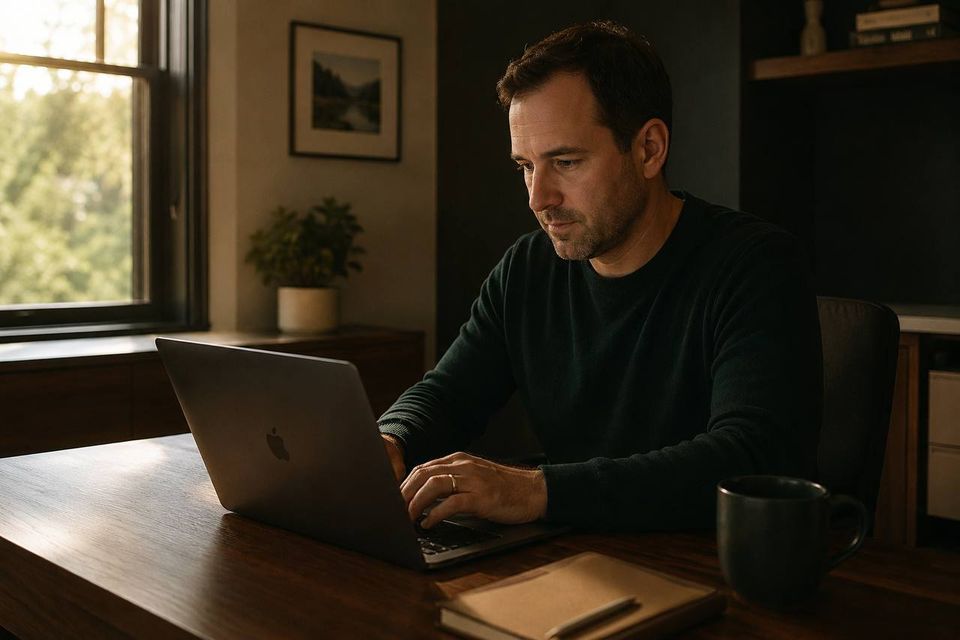
There's a number from a Harvard Business Review study that I keep coming back to.
The average professional toggles between apps and websites roughly 1,200 times a day. That habit eats up nearly four hours every week. Not in meetings. Not on hard problems. Just switching between tabs, tools, and platforms — the administrative friction of modern work.
Four hours a week is twenty hours a month. That's more than two full working days, every month, spent on context-switching.
The professionals who are pulling ahead right now aren't necessarily working harder. They're eliminating that friction.
PwC's 2026 Global AI Jobs Barometer found that workers with advanced AI skills earn 56% more than peers in the same roles without those skills. Productivity growth has nearly quadrupled in industries most exposed to AI since 2022.
That gap is not closing. It's widening.
This isn't really about AI. It's about time. The men using these tools well aren't doing it because they love technology. They're doing it because they want their evenings back.

The shift is already underway whether you're participating in it or not.
Gensler's 2026 Global Workplace Survey found that two-thirds of workers are already "hacking" their workspace to compensate for productivity gaps — DIY fixes for ergonomics, app overload, noise, distraction. People are feeling the friction. Most just haven't found a systematic way to remove it yet.
The ones who have are the ones getting ahead.
I'm not going to tell you to become an AI expert. That's not what this is about.
What I will say is this: the next time you find yourself doing something repetitive — summarizing a report, drafting an email you've written a version of before, searching for something you already know how to find — ask yourself if there's a tool that does that faster. Not because productivity is the point. But because the hour you save on administrative friction is an hour you can spend on something that actually matters.
One billion workers worldwide will need to be reskilled for the new AI landscape, according to the World Economic Forum. The men who stay curious about how they work — not just what they work on — are going to have a significant advantage over the next ten years.

The tools are already here. The question is just whether you're using them.
— Daniel Mercer
Founder, The Provider
Member discussion